Apex Research Labs, LLC is a small applied research shop in Henderson, Nevada. We build lightweight, constant-time cryptography for microcontrollers, telemetry links and the other small devices that run infrastructure.
// WHY I BUILT THIS
“Build encryption small enough for the devices nobody can afford to replace.”
In the summer of 2025 I was contacted about building a digital notary: smart contracts, on a blockchain. The team wanted quantum-resistant crypto because of harvest-now-decrypt-later. Then they ran the numbers on microtransactions. Someone slowly buying $5 of tokenized gold can’t pay a $3 fee to do it. So they dropped post-quantum and stayed with the standard stuff.
I didn’t drop it. I kept asking a smaller question: if a key exchange happens once, what’s the cheapest way to move everything after it? No padding. No extra packets. Nothing to fragment.
The project fell apart. The cipher didn’t. I’ve worked on it every day and every night since, and I’ve rarely missed one. That’s more than a year now. Nobody else funded it and nobody else wrote any of it. It’s mine, and I’ve kept it that way. The design started from a geometric question, not from an existing cipher family: how do you build a state that never revisits itself?
The place it belongs turned out to be somewhere else. I’ve worked in manufacturing plants. PLCs with almost no memory. SCADA gear nobody has updated since the install. Sensors on coin cells that are supposed to last for years in heat that kills most electronics. Then look around your own house: gas sensors, water shut-offs, power cut-offs, remote disconnects. If someone takes over a city’s controls, that isn’t a data breach. That’s gas and water and power.
Those devices can’t hold a big cipher. They can’t afford a message that arrives in four packets when one gets lost. And nobody is going to rip them out and replace them to fix it.
The same constraint shows up in military hardware, where size, weight, and power decide what you can carry. Less crypto overhead means a smaller board, a smaller battery, and fewer things to replace.
Sole Inventor of the APEX-256™ Cryptographic Family
I build the cipher, the firmware and the test bench.
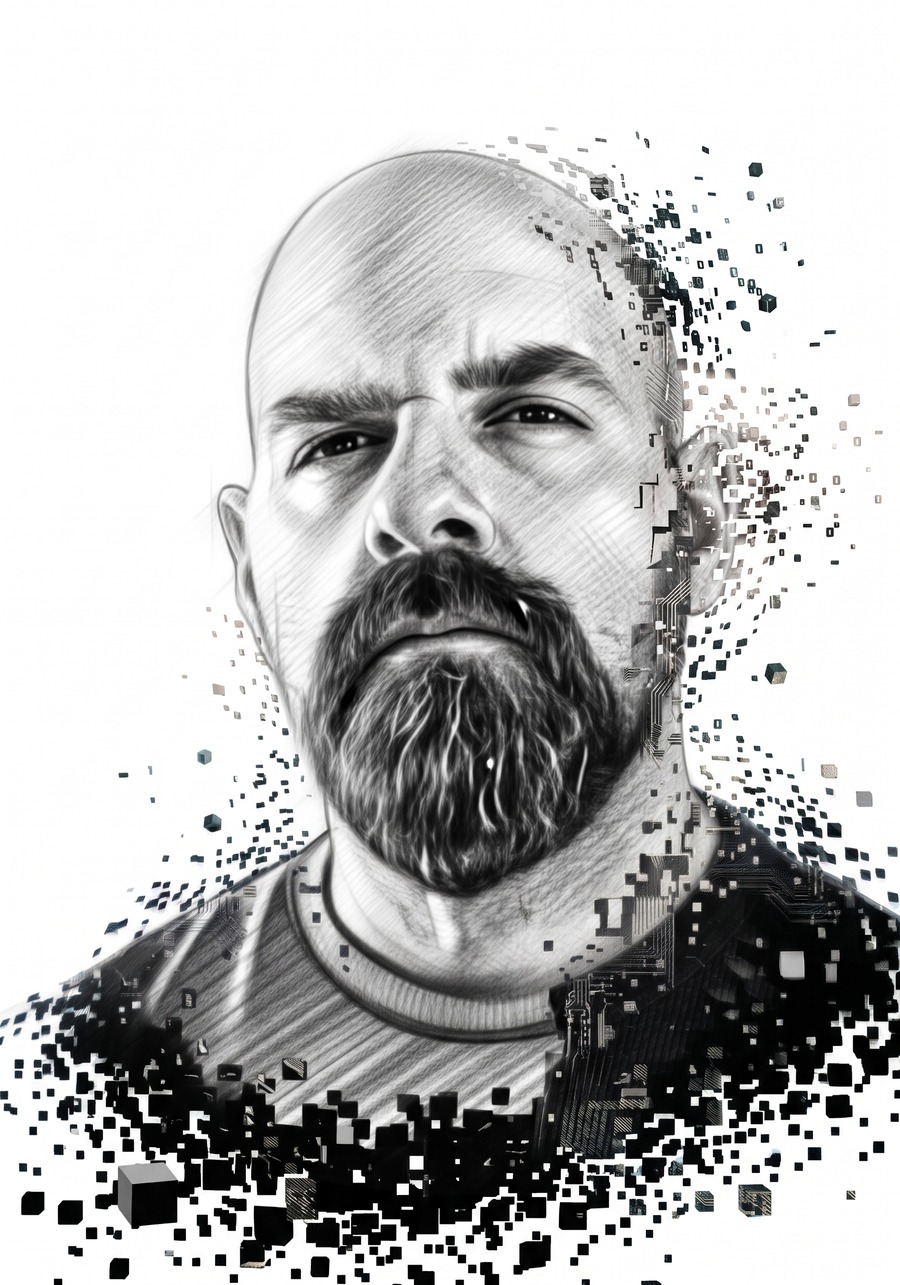
I’m Diab Anthony Sheteyh. I design the cipher, write the firmware, and run the test bench in Henderson, Nevada. APEX-256 is mine, start to finish: sole inventor, protected by pending United States and International Patent Applications.
My background is bare-metal embedded firmware, hardware-in-the-loop automation, side-channel work, signal processing, and trying to break my own designs.
APEX-256 has been through 32 TB of PractRand with no anomalies, the NIST SP 800-22 Rev 1a and BigCrush batteries, 16 cryptanalysis waves, a 38-tool external formal/SMT/SAT/MILP/SCA/RTL battery (Z3, Bitwuzla, cvc5, CaDiCaL, Coq, F*, HiGHS, SCALib, Lascar, VerFI, SymbiYosys), a certified 4.0x to 24.0x reduced-round safety margin, and 601+ power captures on real silicon. Nobody outside this lab has attacked it yet. I’d like that to change. If you break things for a living, start here.
We are a registered small business in SAM.gov and available as a prime, a subcontractor or a teaming partner on SBIR / STTR topic transitions and OTA consortia.
Identifiers, NAICS and PSC codes, and core competencies are in a one-page capabilities statement you can forward to your contracting office.
No heap. No tables. Ciphertext the same length as plaintext. If it doesn’t fit on a small, cheap, old chip, it isn’t finished.
// RULE 02
Prove what can be proven
The state update is a bijection, and that can be shown. Z3 covers other specific properties. We claim nothing past that, and we say what hasn’t been done.
// RULE 03
Constant-time by construction
No branches on secret data and no lookup tables. That closes the timing and cache leaks. Power and EM behavior get measured on the bench, not assumed.
// RULE 04
Made in the US
Invented and built in Henderson, Nevada, with no outside funding and no outside development. R&D is 100% domestic.
// NEXT STEP
Run it on your hardware
Read the specs, look at the test results, or ask for the evaluation SDK.